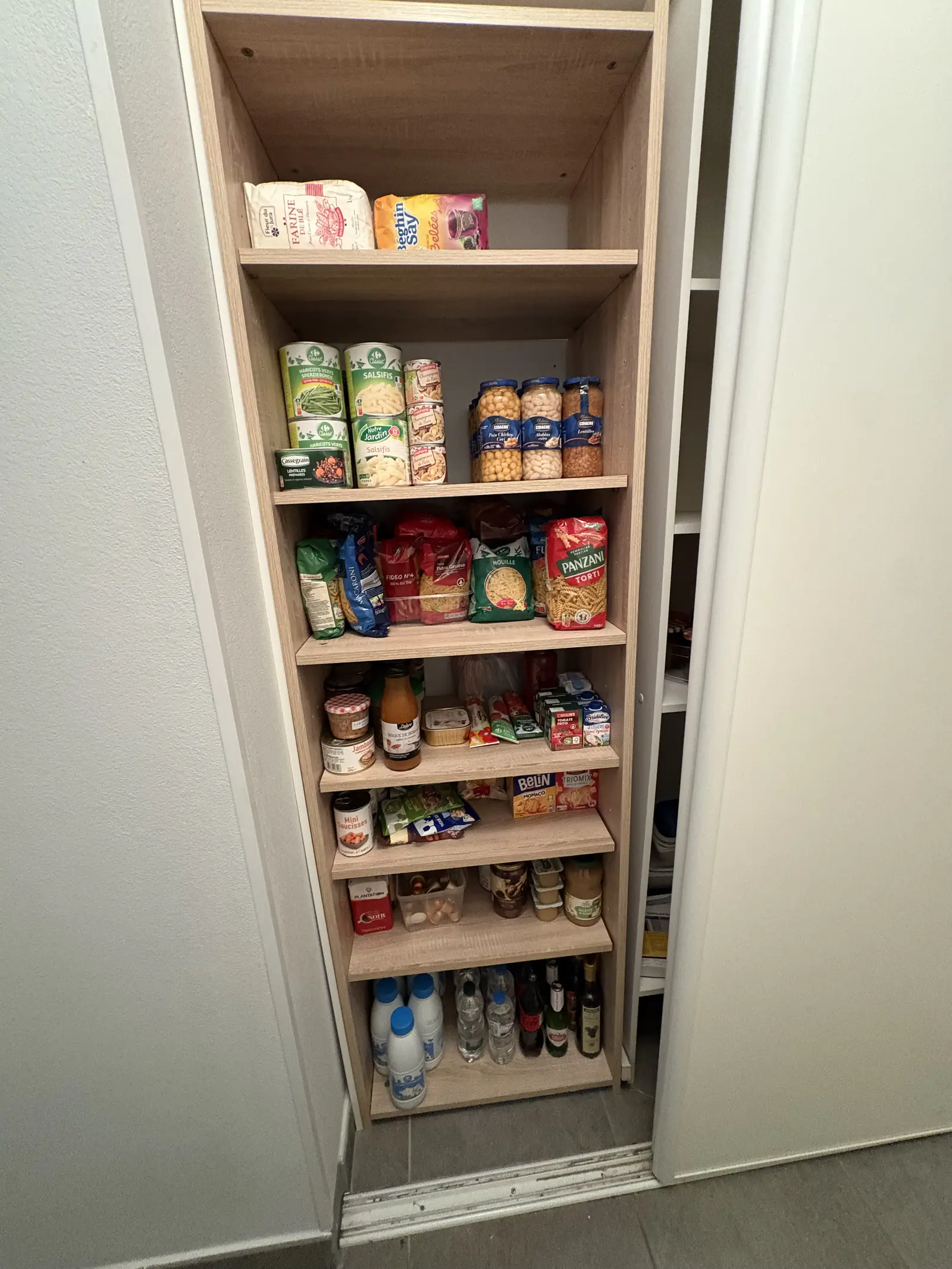
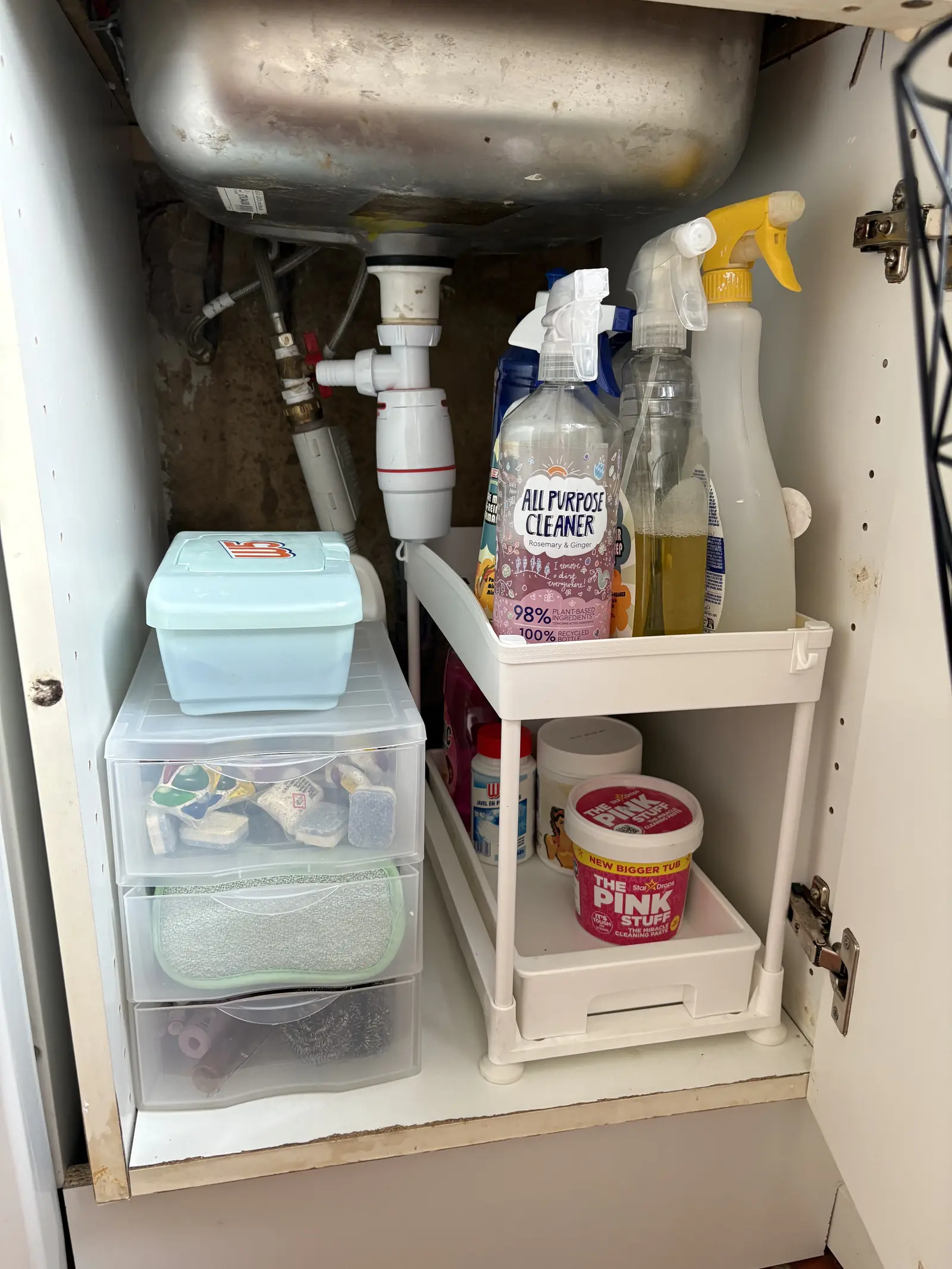
You look at a whole room, the visual overload weighs on you, and you close the door again. That's human. The hardest part of decluttering isn't the sorting — it's starting.
First, some good news
The problem isn't you. It's the system. If the clutter keeps coming back, it isn't a lack of willpower: it's that the organisation in place doesn't match your real habits. We're going to put that right — gently.
1. Start small, to move fast
Never take on “the whole house” at once. Choose a single drawer, a shelf, a corner of the worktop. In twenty minutes, you get a visible result — and that first bit of momentum calls for the next.
2. Three decisions, no more
For each item, just one question: do I keep it, pass it on, or give it new value?
- Keep — what genuinely serves you, or genuinely matters.
- Pass it on — in good condition, but no longer for me (donation, second life).
- Give it new value — directed to the right channel rather than thrown away.
3. Lighten before you tidy
Tidying away what's surplus just moves the problem around. We lighten first; we structure afterwards. It's in that order that organisation becomes lasting.
Tidying your home is tidying your life.
4. The “just in case”
Those things we keep “just in case” take up real space for a hypothetical need. The question isn't “could this be useful?” (almost anything could be useful), but “do I actually use it?”.
Need support to take the plunge, room by room? Discover the spaces I work on, or request your quote.